
26 Bases for 2026
26 of the best weekly-monthly bases in the market as we head into 2026.

Hi everyone,
I hope this past week has given you a chance to disconnect from the screens and spend time with your family, friends, and loved ones.
As I mentioned last week, there will be no “Upcoming Week” article this week as we’re headed into 2026. Instead, I have something that some of you might actually enjoy even more. This article will be going over the 26 best bases I see in the market today as we head into 2026… 26 bases for 2026.
I also want to mention that the 2026 Preview will be out next weekend. Last year’s was a huge success with the vast majority of themes and many of the names outperforming the market by a wide margin. In that preview I highlighted the risk of a major correction in H1 2025 tied to Trump volatility and tariffs that ultimately became a buyable dip, why I expected solar and China to outperform, and more. A few of the names included in the 2025 preview were OKLO, KTOS, NBIS, OUST, TEM, EOSE, FSLR, and more. The 2025 preview list is handedly beating the S&P500. If you want to revisit the 2025 Preview, you can find it here, and I also recapped it here. The 2026 Preview is going to be far more in depth now that I finally have a space where I can lay out the full framework properly. It’s thorough, it’s detailed, and I genuinely think it’s a really good read.
Yes, the 2026 Preview will be posted exclusively here on Substack.
Now, let me just touch on why I love big weekly and monthly bases.
One of my favorite setups in the market is a big base. Over time I’ve found that the size of the base often dictates the size of the move, hence why I like to focus on weekly and monthly bases or consolidations. Big bases tend to lead to big breakouts and there are a few simple reasons why this keeps working across every market cycle.
To start, big bases represent time. When a stock spends weeks, months, or even years going sideways or building a range, it’s doing a lot of work under the surface that many people don’t talk about. Weak hands and long time holders are being shaken out as impatient money leaves and ownership gradually shifts to longer term holders with higher conviction and a lower cost basis. These new holders are far more likely to hold on than someone who has been holding for weeks, months, or years as they watch their investment make no progress.
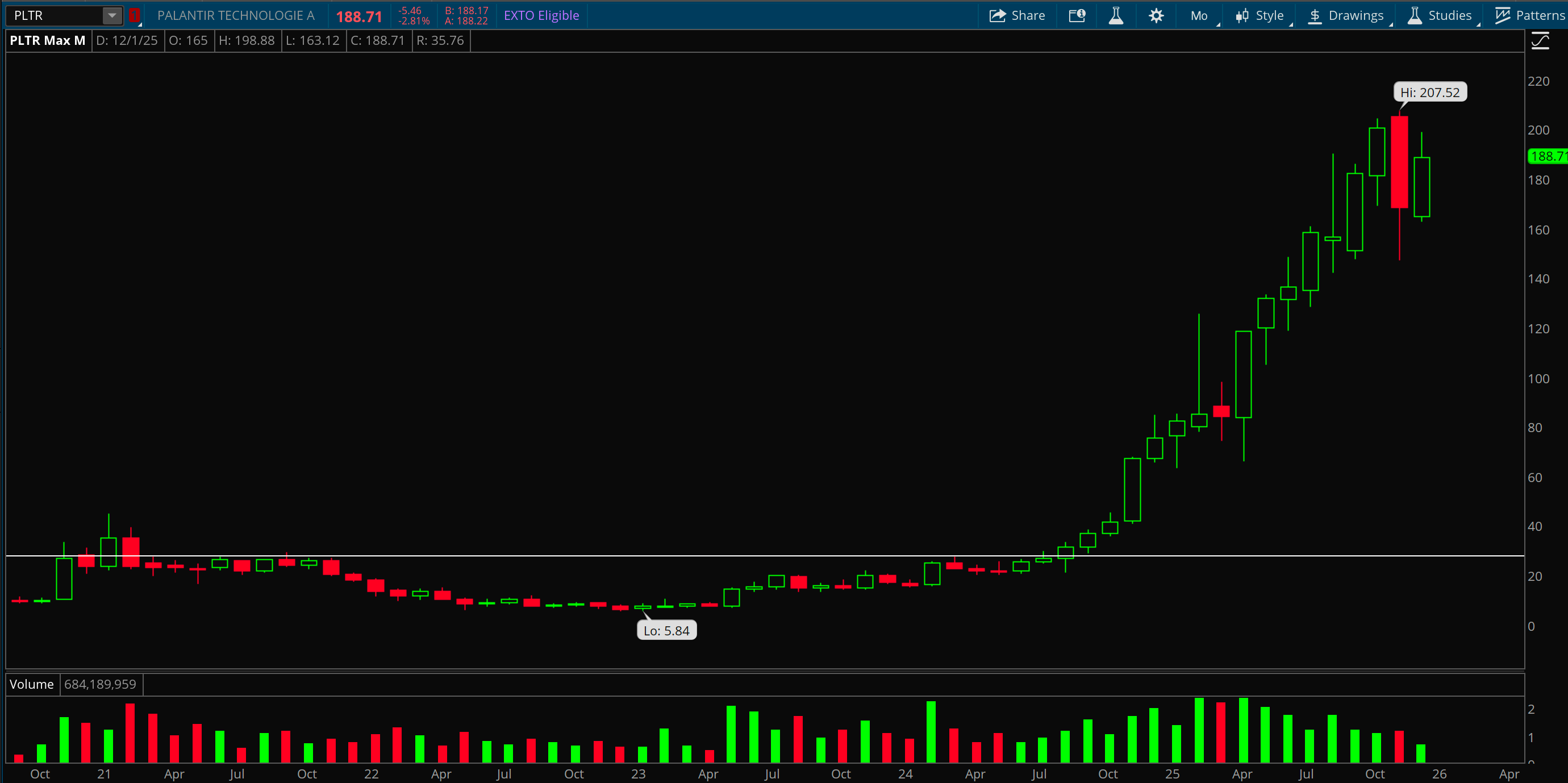
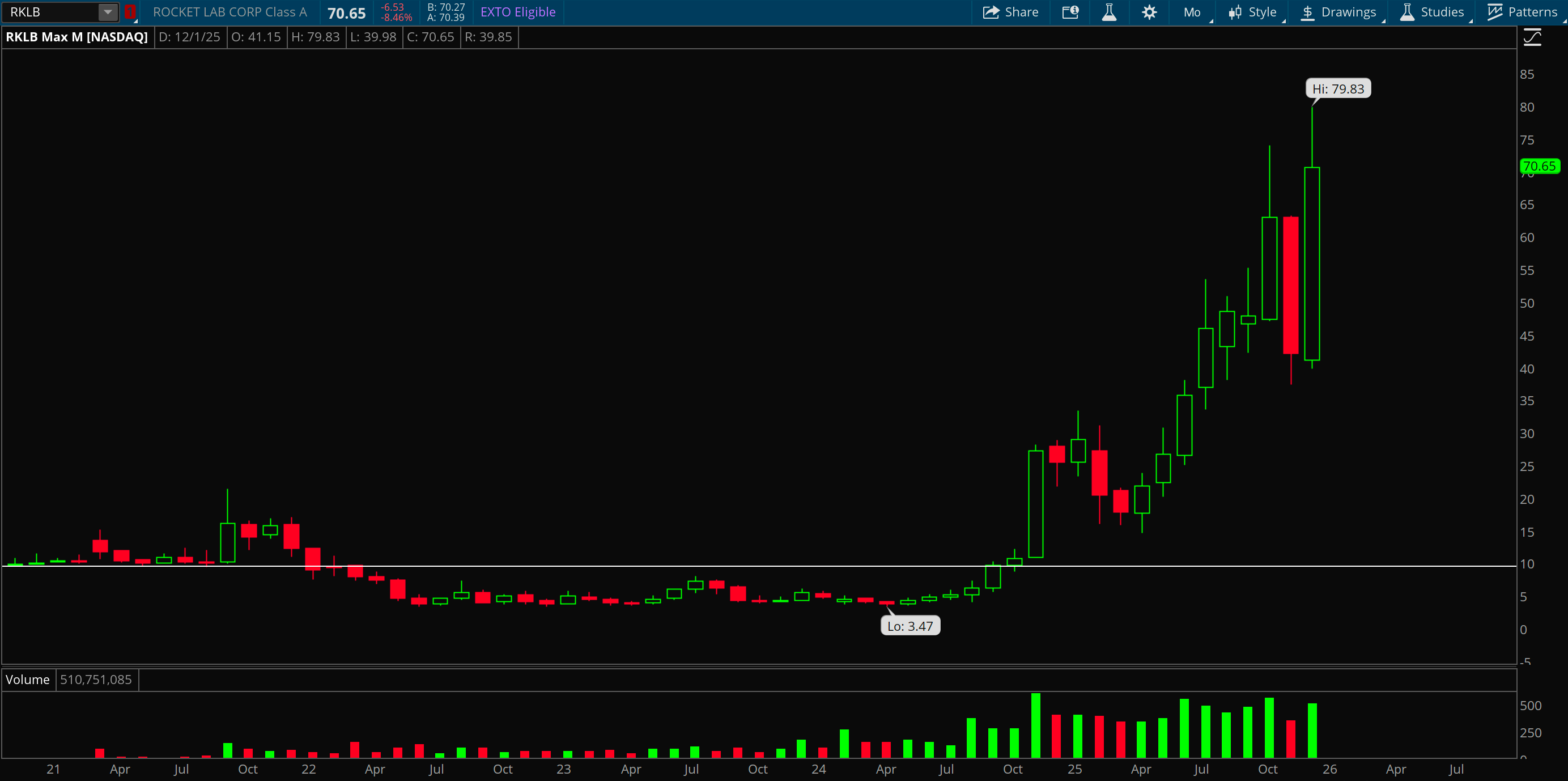
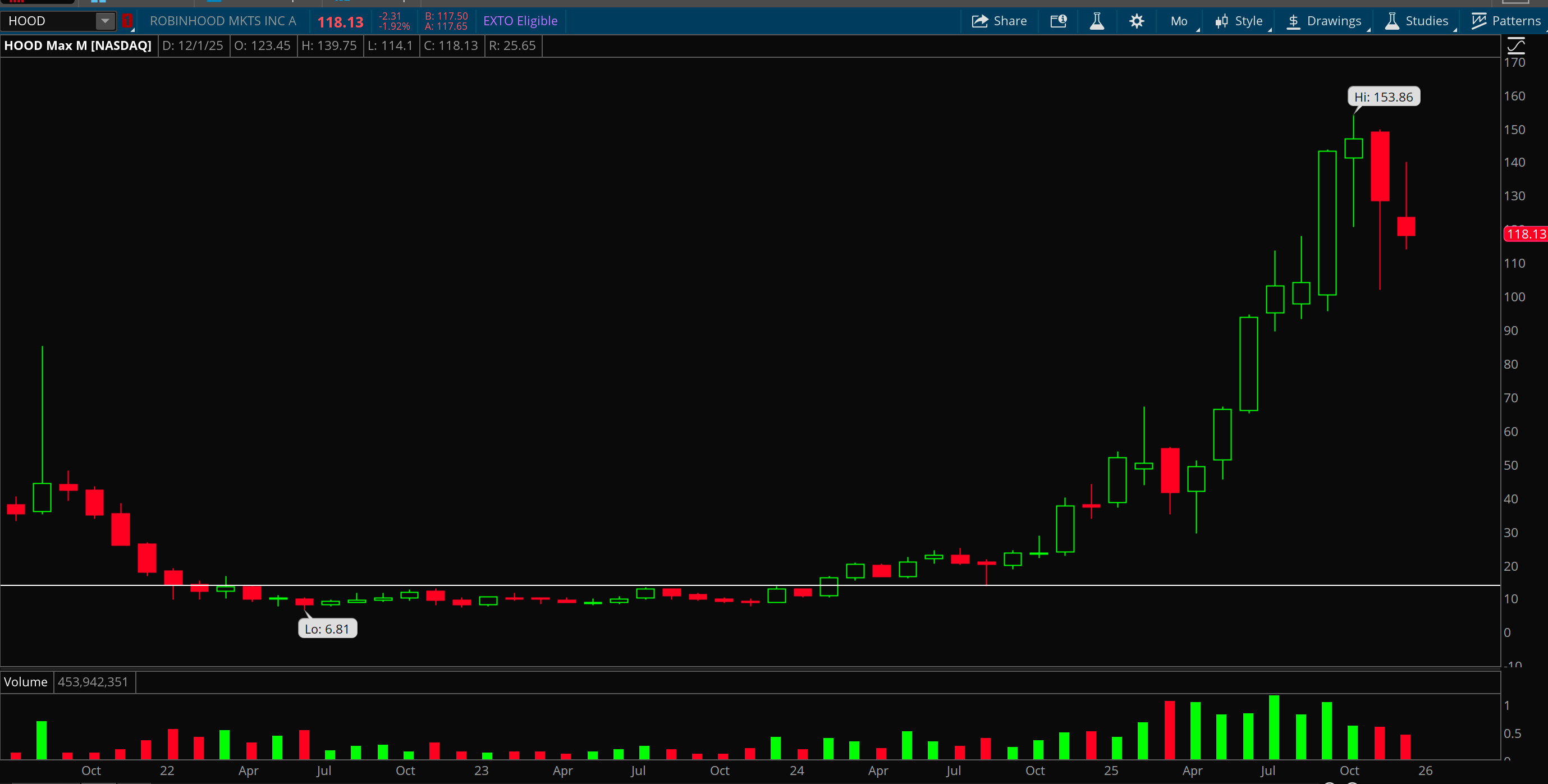
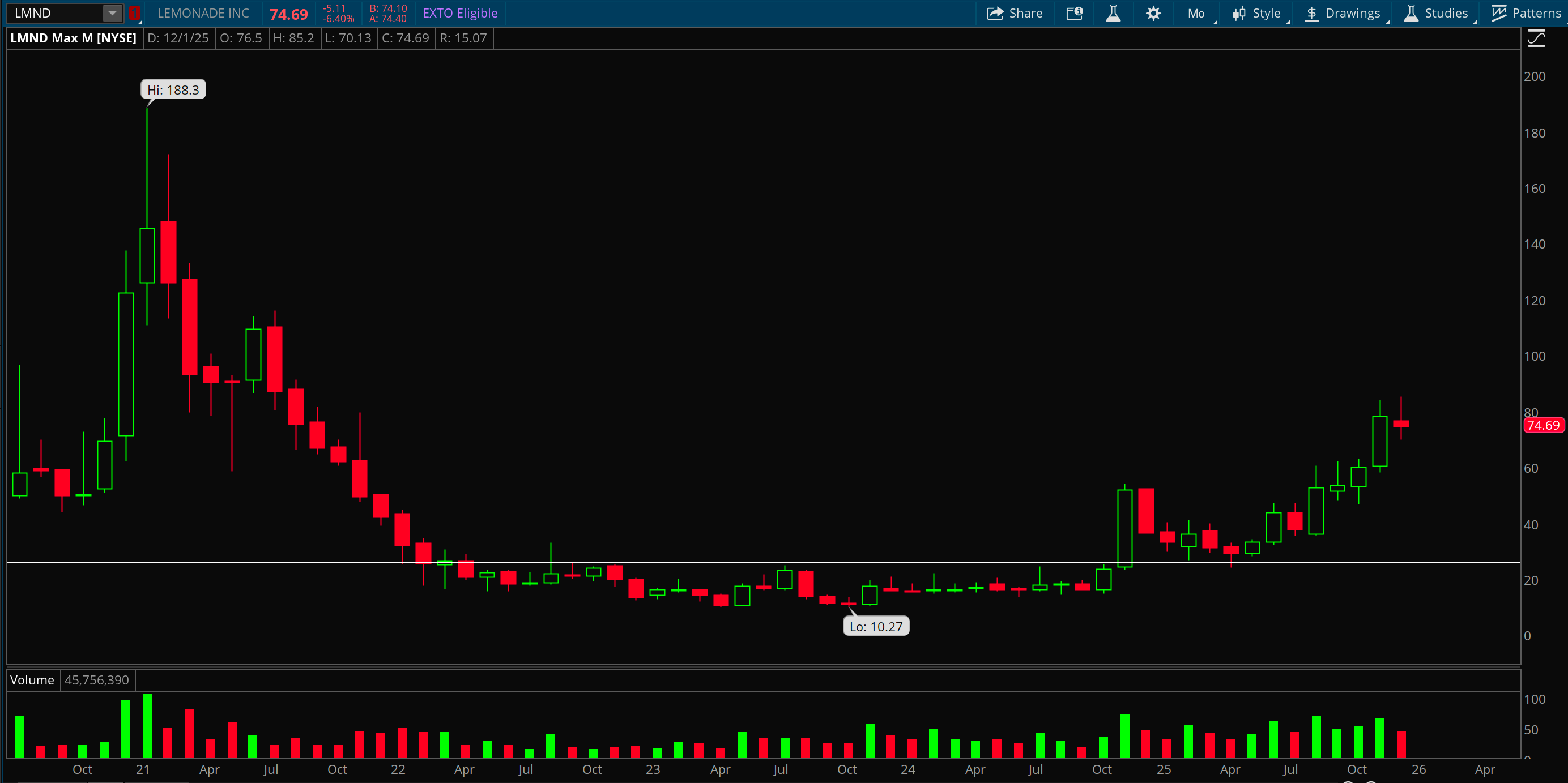
Oftentimes, many capitulate within a base right before the stock finally gains momentum! Textbook market psychology. Markets are mechanisms for transferring shares from those with low conviction to those with high conviction, and a long base is one of the cleanest ways that transfer happens. We saw this with stocks like Palantir, Robinhood, Roblox, Lemonade, Rocket Lab, and many others over the last year. By the time the stock breaks out, the company often looks far better fundamentally than it did previously.
Another reason big bases work is compression. One of my favorite phrases when it comes to the market is “from compression comes expansion.” Volatility contracts as the base develops and price action becomes more controlled. This is just a stock or asset building up energy. When price finally resolves higher, there is often very little overhead supply because anyone who wanted to sell already had plenty of time to do so within the base. The lack of supply is what allows price to move quickly once demand steps in.
There is also a psychological component I like to think about. Big bases are boring and often become ignored the longer time goes on. Big bases are not exciting and they do not reward impatience which is the opposite of what most traders want. Many traders like excitement and dopamine while trading and investing, big bases provide the opposite of that. Most market participants would rather chase something that is already moving than sit through sideways action. When a stock finally breaks out of a long base it often catches people underexposed or completely flat which can amplify the move as traders and investors scramble to get involved.
From a risk management perspective, big bases also offer very clean structure. The top of the base and the bottom of the base are typically clearly defined. These ranges make it easier to know when a thesis is right or wrong. If the base breaks out, it’s a clear level. If the base breaks down, there's a clear breakdown level. Breakouts from well formed bases tend to offer better risk-reward than extended moves already progressing through an uptrend. Why? Because you are entering near the beginning of a potential new trend rather than the middle or the end of one. Buying Palantir as it based around $15 or broke out around $30 or $45 is better than buying here at $200! I always prefer to be positioned at the start of a trend vs. the end, the lower the cost basis the lower the risk.
Let’s go through a few examples quickly:
PLTR:
RKLB:
HOOD:
LMND:
BE:
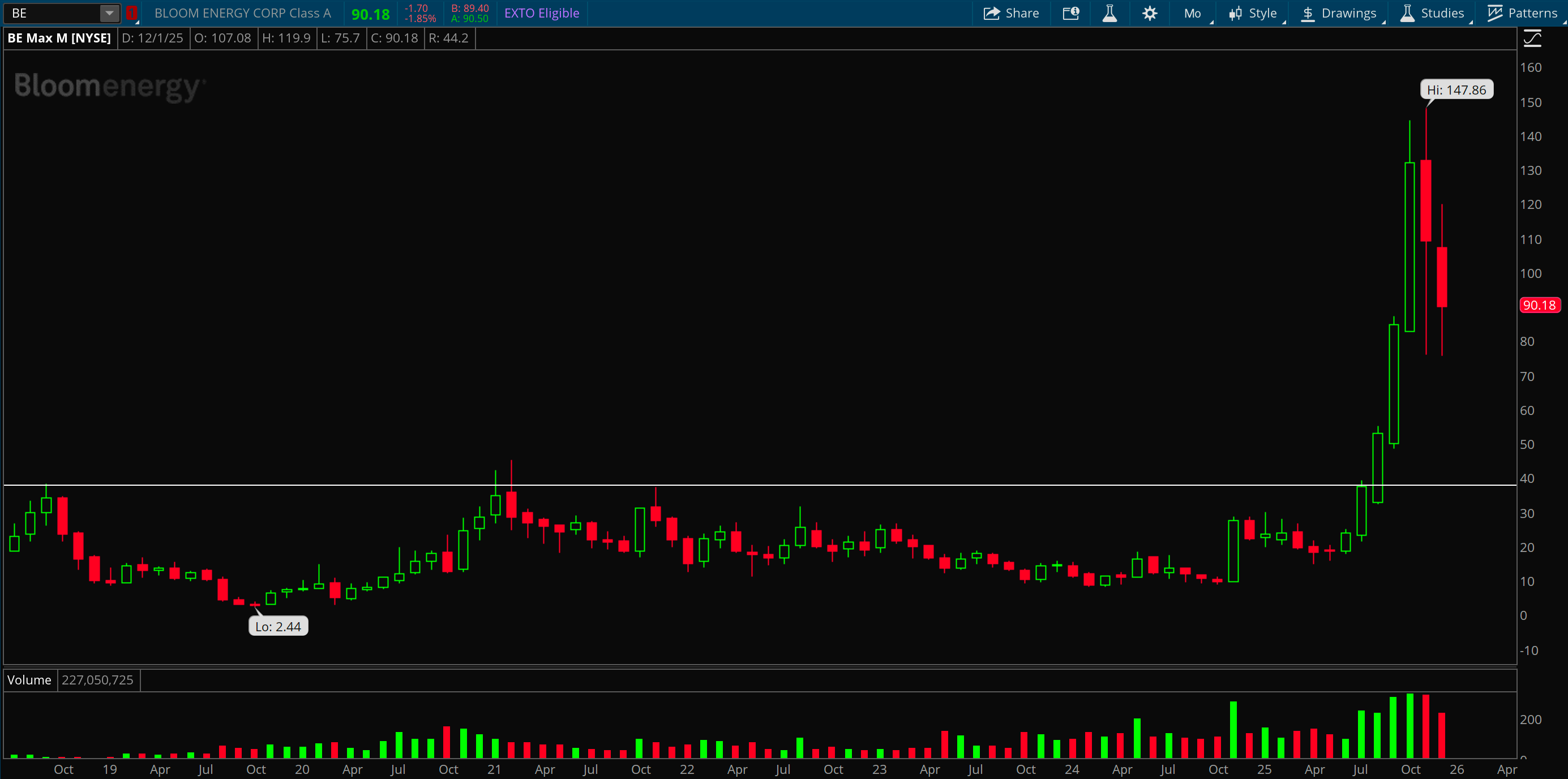
As you can see by the examples above, long, drawn out bases/consolidations can result in very explosive moves higher.
When a stock emerges from a multi month or multi year base it’s often entering a new phase of the stock lifecycle. Those cycle changes are where the largest moves tend to come from. This is why I consistently pay attention to stocks that have gone nowhere for a long time, we’ve seen what happens to these types of stocks.
In the remainder of this article I’m going to outline 26 big bases I’m watching to potentially break out in 2026. This does not mean every single base in this article works, reality is that trading and investing isn’t that easy. If every pattern, base, etc. worked out as it “should”, the market would be easy and everyone would be rich. But what we can do is use historical precedence, data, and experience to potentially identify what comes next. A big part of making outsized returns in trading and investing is “seeing things before they happen.”
Let’s get into it.